
The Goods and Services Tax (GST) is a form of indirect taxation imposed on the supply of goods and services. It serves as a unified indirect tax across the entire nation, consolidating various taxes into a single system. This consolidation has not only simplified tax procedures but also significantly expanded the tax base. Every business entity involved in manufacturing, trading, or service provision must register under GST once they meet the turnover threshold. Voluntary online GST registration offers numerous benefits, including enhanced business credibility and the ability to claim Input Tax Credits (ITC), among others. Without GST registration, businesses cannot charge GST to customers or seek input tax credits for GST paid. GST registration is linked to the PAN (Permanent Account Number), and the total income is determined based on this PAN. Hence, even if a person operates multiple business locations, the income is aggregated under one PAN for calculation purposes.
1.Ensuring invoice issuance in accordance with GST rules and regulations. 2.Depositing GST with the Government 3.Filing of GST monthly returns 4.Maintaining all records for 8 years 5.Filing of annual return 6.Getting GST Audit conducted on crossing the turnover threshold
You can choose any of our packages based on your requirements
Acquiring a Digital Signature Certificate (DSC) marks the initial phase of GST Registration for certain categories of assessees It typically takes two days to obtain a DSC
We will determine the appropriate SAC Codes or HSN for your GST Registration based on the products you sell or the services you offer
We will process your business's GST Registration application and provide you with the ARN number based on the information and documents you supply
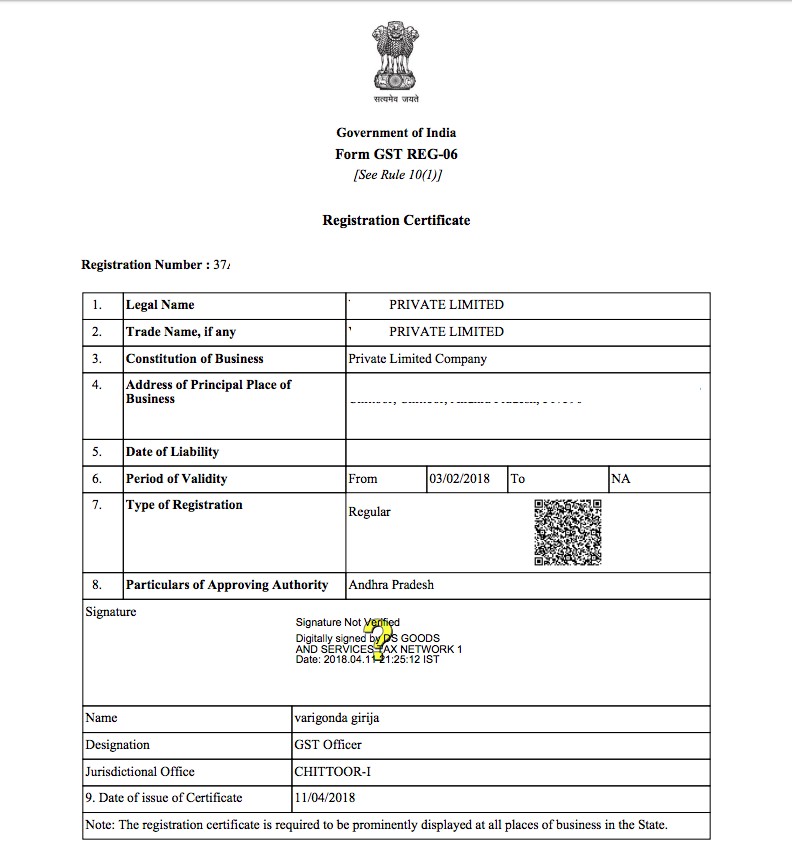
Once the application and documents you've submitted are verified by a government officer, you'll receive the GSTIN and GST Registration Certificate

Any individual or business selling goods must apply for GST registration if their annual turnover exceeds Rs. 40 lakh (or Rs. 20 lakh for special category states). However, there are certain circumstances where a taxable person must pay GST even if their income is below this threshold Similarly, individuals or businesses providing services must register for GST once their income surpasses Rs. 20 lakh (or Rs. 10 lakh for special category states).
The GST system is categorized into four tiers, with rates set at 5%, 12%, 18%, and 28%. Certain items, such as luxury and demerit goods, may also incur an additional cess.
GST does not apply to alcohol intended for human consumption or certain petroleum products.
Yes, stock transfers are subject to Integrated GST (IGST) administered by the central government.
No, transactions involving the purchase and sale of securities are still regulated by the Securities Transaction Tax.
Taxable transactions under the GST Act encompass the provision of goods and/or services, comprising all activities such as sale, barter, transfer, exchange, rental, lease, license, or disposal carried out or agreed upon in exchange for consideration involving taxable goods or services.
