
All entities with GST registration must file GST returns, regardless of their business activities, sales, or profits during the filing period. Every GST-registered organization must submit GSTR 3B on a monthly basis and GSTR 1 either monthly or quarterly before the due date to avoid incurring late filing fees and interest charges. Quarterly filings are required for composition taxpayers. All entities registered under GST, regardless of turnover, must submit their annual GST return (GSTR 9). Failure to file GST returns may result in significant penalties, and continuous non-compliance for six months could lead to the cancellation of GST registration, which can only be reinstated once all outstanding dues are settled.
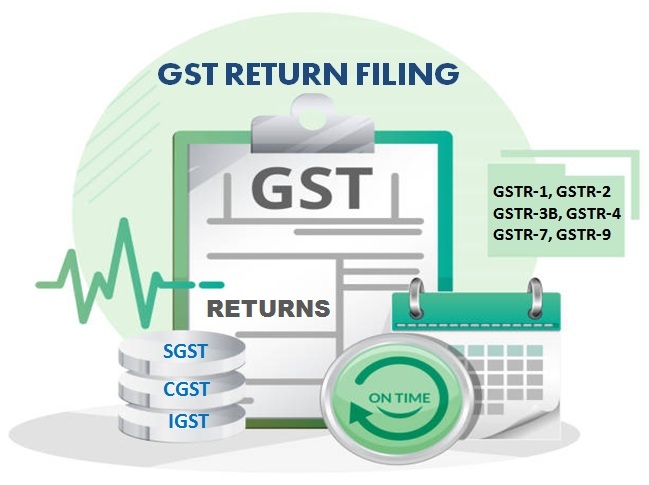
Timely filing prevents penalties, maintaining compliance and financial efficiency.
Accurate returns enable businesses to claim refunds on taxes paid for inputs, reducing overall tax liability.
Consistent filing enhances credibility, facilitating smoother loan approvals from financial institutions.
Proper documentation and filing ensure eligible businesses can reclaim excess taxes paid, optimizing cash flow.

No, for all the three the return forms are common. However, for each there is a separate column, which needs to be filled based on the intra-state and inter-state supply.
Businesses other than casual taxpayers are required to file an annual GST return.
Late filing fees starts from Rs.20 per day and depends on annual turnover of business.
It is entirely based on the kind of registration and transactions There are different periods that have been specified
- Monthly returns need to be filed by regular taxpayers, tax deductors, foreign non-residents, input service providers, and e-commerce operators have to file monthly returns
